

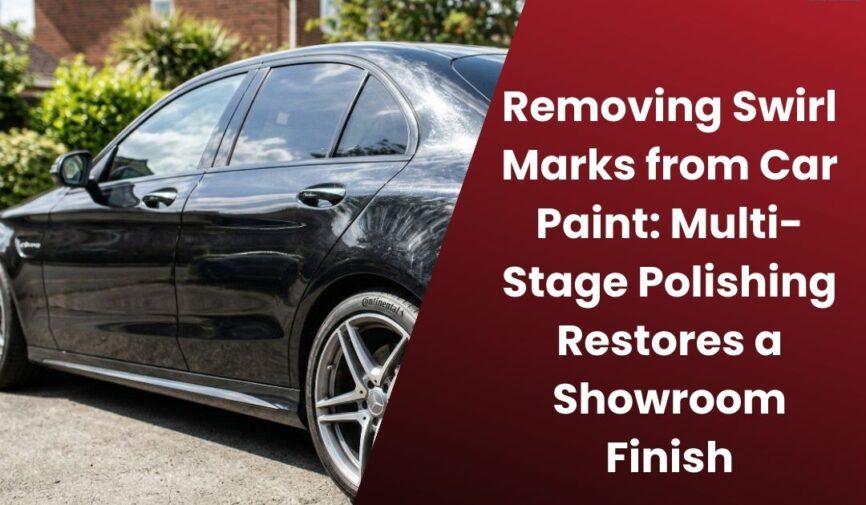
Removing Swirl Marks from Car Paint: Multi-Stage Polishing Restores a Showroom Finish
Swirl marks are tiny scratches that appear on your car’s paint over time. You might notice them when the sunlight hits your car just right, making the surface look dull and scratched.
They don’t damage the paint deeply, but they do make your car look older than it really is.
If you drive around London, Hounslow or nearby towns, swirl marks are very common. Dust, traffic, and even frequent car washes can create them. Even washing with a sponge or towel can leave fine lines if the surface isn’t clean.
The good news is that you can fix these scratches and bring back your car’s shine. Multi-stage polishing is the professional way to do it.
This blog will explain how multi-stage polishing works, why it’s better than a quick buff, and how you can keep your car looking like it just came from the showroom.
What Causes Swirl Marks on your Car
Swirl marks occur because the clear coat, the top layer of your car’s paint, is very thin and easily damaged. You don’t have to hit a tree or get in an accident to get them. Small things in your daily drive can do the job.
Here are the most common causes:
- Washing your car with a dirty sponge or towel.
- Using automatic car washes with hard brushes.
- Wiping dust or dirt without proper water.
- Polishing with the wrong pad or too much pressure.
- Parking near construction or dusty areas in Hounslow or London.
Even if you think you are careful, swirl marks can appear over time. They are more noticeable on darker cars but can affect any colour.
Also Read: Graphene vs. Ceramic Coating: Which is Better for your Car
How Multi-stage Polishing Works To Removing Swirl Marks
Multi-stage polishing is a process in which the paint is corrected in stages. Each step removes more imperfections, leaving the surface smoother. It’s not something you do in five minutes. Professionals plan it based on the car’s paint condition.
Here’s what happens step by step:
Deep Cleaning Before Polishing
Before any polishing, your car needs a thorough wash. This removes dirt, tar, and iron particles. If you skip this, rubbing polish over dirt can create more scratches. Clay bars are often used to clean the surface more deeply.
Inspecting the Paint
After cleaning, the paint is checked under strong light. This shows every swirl mark, fine scratch, and dull spot. Professionals use this to decide which polish and machine to use. It ensures nothing is missed.
Cutting Stage
The first stage of polishing is called cutting. It uses a compound that slightly levels the clear coat and removes swirl marks and light scratches. At first, it might make the paint look a little hazy, but that’s normal. The haze is fixed in the next step.
Refining Stage (Medium Correction)
After cutting, a finer polish is applied. This removes the haze and minor scratches left behind. It also begins to restore colour depth and gloss. This stage makes your car’s paint look smoother and more reflective.
Finishing Stage (Fine Polishing)
The last stage uses a very gentle polish to perfect the surface. It enhances the reflection, colour depth, and shine. After this step, your car will look like it just came from the showroom.
Applying Protection
Once the polishing is complete, applying a protective coating is recommended. Sealants or ceramic coatings create a barrier that keeps dirt and UV rays from damaging the paint. Protection also reduces the chance of swirl marks coming back quickly.
Regular Maintenance
Polishing is important, but how you care for your car afterwards matters too. Washing with two buckets, using clean microfiber towels, and avoiding automatic brushes can keep swirl marks away. Regular care makes the finish last longer.
Professional Expertise Matters
Driving in London, Hounslow and nearby towns exposes your car to dust, traffic grime, and road debris. A professional knows how to handle these conditions.
They can safely remove swirl marks while maintaining the paint’s depth and gloss. Multi-stage polishing isn’t just about shine; it’s about protecting your car long-term.
Why Multi-stage Polishing is Better than Quick Fixes
Some car owners try a single-stage polish or a home kit. While it can temporarily improve shine, it does not remove deep swirl marks or correct haze. Multi-stage polishing:
- Removes visible swirl marks completely.
- Restores an even gloss across the surface.
- Enhances colour depth.
- Protects the paint from future scratches.
A controlled, multi-step process is much safer and more effective than rushing through a single polish. You get results you can see and maintain.
Book A Professional Car Detailing Service in Hounslow
How Often Should you Polish your Car
Polishing removes a thin layer of the clear coat, so it’s not something you do every month. For most cars:
- Light polishing every 2–3 years is enough.
- Heavy correction only when defects are visible.
- Daily care prevents swirl marks from forming again.
If you follow these guidelines, your car can keep its showroom finish for years, especially with proper washing techniques.
Also Read: Ceramic Coating vs. Wax: Which is Better for the London Climate?
Summary
Swirl marks are a common issue, but they don’t have to make your car look dull. Multi-stage polishing is a safe, effective way to remove them while restoring colour, gloss, and reflection.
For anyone in London, Hounslow or nearby towns, this method gives your car a finish that stands out and lasts. Combined with proper care and protection, you can keep your vehicle looking like it just came from the showroom.
For the best results, trust professional services like Beyond Just Service. They make sure your car gets the right polish, protection, and care for long-lasting shine and value.